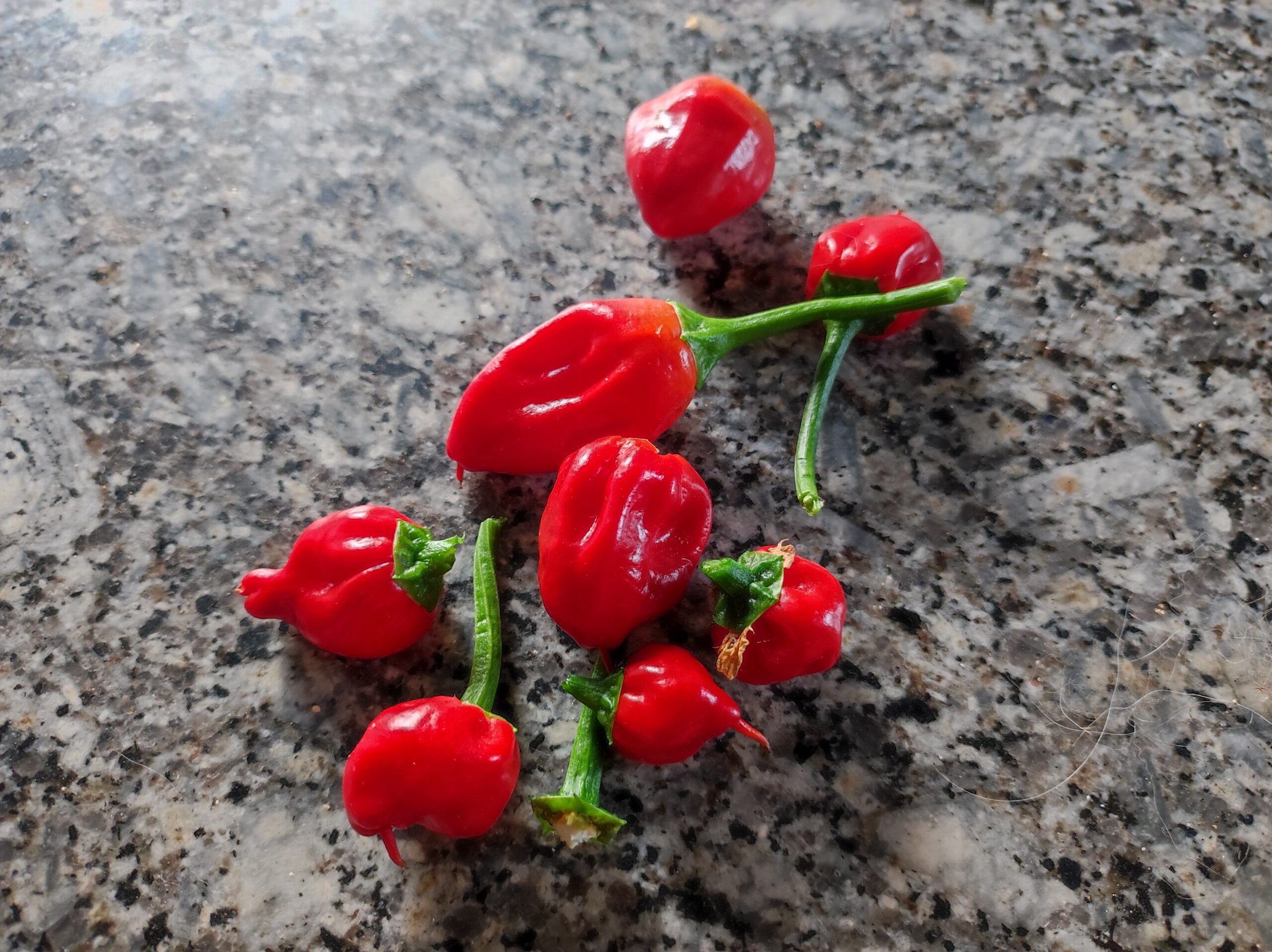

Our first harvest of padron peppers this year! This was on a plant from last year, so I wonder if that’s why they are smaller than normal. They are normally green, however these were tucked away and turned red before I picked them.
We’ve always seen padron peppers in Spain. They feature a lot in tapas and as a side dish. However I didn’t realize they were actually from Galicia (although perhaps the fact that there are many different variety of padron peppers sold here should have been a clue).
I found this article about their history:
Padrón peppers (pementos de Padrón in Galician) are a small, mild green pepper originating from the municipality of Padrón in Galicia, northwestern Spain. They are a beloved staple of Galician cuisine and have gained popularity throughout Spain and beyond.
Key Characteristics:
- Size & Flavor: Small (5-7 cm long), thin-skinned, and usually mild, though occasionally a spicy one appears (leading to the famous saying “Os pementos de Padrón, uns pican e outros non” – “Padrón peppers, some are hot and some are not”).
- Culinary Use: Typically fried in olive oil and sprinkled with coarse sea salt, served as a tapa or side dish.
- Seasonality: Best in summer (June–September), when they are freshest and most abundant.
Cultural Significance in Galicia & Northern Spain:
- Traditional Crop: Grown in the Val do Ulla area near Padrón, their cultivation dates back to Franciscan monks who brought peppers from the Americas in the 16th century.
- Festivals & Celebrations: The Festa do Pemento de Padrón (held in August) honors the pepper with tastings, music, and local pride.
- Social Food: Often enjoyed in tapas bars alongside other Galician specialties like pulpo á feira (octopus) or empanada galega.
- Symbol of Galicia: Like queso tetilla (cheese) or albariño wine, Padrón peppers represent Galicia’s rich agricultural and culinary traditions.
Beyond Galicia:
While deeply rooted in Galician culture, Padrón peppers are now enjoyed across Spain and internationally, often as a simple yet flavorful tapa paired with beer or white wine.